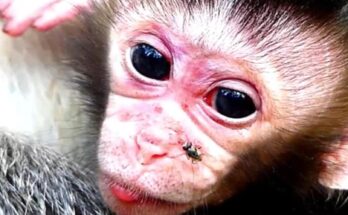
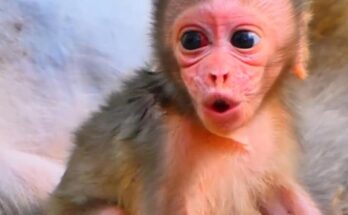
A tiny newborn baby monkey sat quietly on a tree branch with tears in its eyes. It had recently lost the comfort of its mother and now faced the difficult challenge of surviving alone. Hungry and frightened, the little monkey made the cutest facial expressions, hoping someone would notice its cries for help. Its innocent eyes and tiny hands showed just how helpless it was.
Normally, a baby monkey depends entirely on its mother for milk, warmth, and protection during the first months of life. Without its mother’s milk, the newborn quickly became weak and exhausted. It cried loudly throughout the day, its heartbreaking screams echoing through the forest. The baby did not understand why its mother was gone or why no one came to comfort it.
As time passed, the little monkey searched everywhere, looking for food and safety. It tried to follow other monkeys, but they continued moving through the trees. The baby was too young to find enough food on its own and needed constant care to survive. Its tiny body trembled with hunger, while its sad face reflected fear and loneliness.
In situations like this, orphaned baby monkeys have a much better chance of survival if they are accepted by other members of their troop or rescued by trained wildlife professionals. These caregivers can provide proper nutrition, warmth, and medical attention until the baby grows stronger. Caring for wild animals requires knowledge and experience to ensure they remain healthy and, whenever possible, can return to their natural habitat.
The story of this hungry baby monkey reminds us how important a mother’s care is in the animal world. Every young animal deserves the chance to grow up safely with love and protection. By respecting wildlife and supporting conservation efforts, we can help protect vulnerable animals and preserve the forests they call home for future generations.