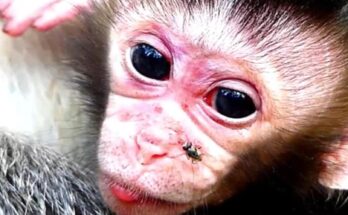
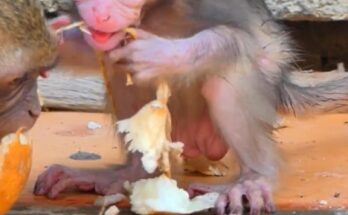
Heidi is having a very difficult day. She appears weak and breathes heavily as she lets out loud cries, seemingly searching for comfort and food. Her tiny body looks exhausted, and her emotional expressions make it easy to understand that she is struggling. Instead of staying close to the other monkeys, Heidi quietly moves away and spends much of her time alone.
As the others continue their normal activities, Heidi keeps her distance. She may simply need a quiet place to rest, or she may be looking for an opportunity to eat without interruption. Young monkeys can become upset for many reasons, including hunger, tiredness, or stress. Without knowing the full situation, it is impossible to determine exactly why Heidi is behaving this way, but her cries clearly show that she needs attention and care.
Watching Heidi’s loud calls and heavy breathing creates an emotional moment. Every small movement reflects how tired she feels as she waits for comfort. Even when she pauses, her eyes continue to search around, hoping for reassurance and the chance to settle down. Her determination to keep going despite her discomfort shows how resilient young animals can be.
This touching scene reminds us that young animals depend on proper nutrition, protection, and patient care as they grow. Moments of crying or isolation can have many possible causes, and they should be interpreted carefully rather than assumed to have a single explanation. With attentive caregivers and a safe environment, young monkeys have the best opportunity to recover from stressful moments and continue developing in a healthy way.
Heidi’s story encourages viewers to appreciate the importance of kindness, responsible animal care, and compassion for vulnerable young animals. We can all hope that she soon finds the comfort, nourishment, and security she needs to become active, healthy, and playful once again.