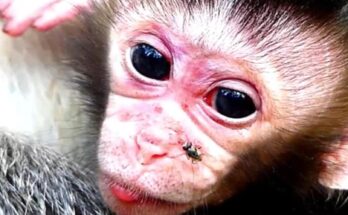
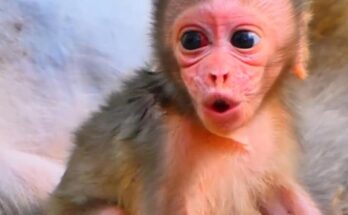
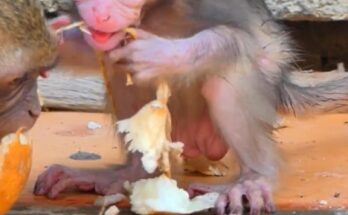
What is this monkey doing, and what will happen when the moment finally comes for it to return to the wild? Watching a monkey interact with humans can be fascinating, especially when it has become familiar with the care, food, and protection provided by people. The monkey may appear curious, playful, or even uncertain as it explores its surroundings and observes everything happening around it.
However, returning a human-cared-for monkey to the wild can be a major transition. The wild environment is completely different from the safe and familiar place it has known. Instead of relying on a person for food and protection, the monkey may need to find food, climb trees, recognize dangers, and interact with other monkeys. These natural behaviors are important for helping it become independent.
The most emotional moment may come when the owner finally opens the enclosure and gives the monkey the opportunity to leave. Will it immediately run toward the trees, or will it hesitate and look back? It may seem confused at first because the person who cared for it has been an important part of its daily life. A cautious reaction would not necessarily mean the monkey cannot adapt; it may simply need time to understand its new surroundings.
If the monkey has been properly prepared for release and the location is suitable, returning it to its natural habitat can give it the opportunity to live more independently and behave like a wild monkey again. It may slowly explore the forest, search for natural food, climb trees, and eventually connect with other monkeys.
This moment is more than simply letting an animal go. It represents a difficult but important step toward independence. The owner may feel sadness while saying goodbye, but the ultimate goal is the monkey’s well-being and ability to live safely in its natural environment. The question remains: when freedom arrives, will this curious monkey confidently disappear into the trees, or will it pause for one last look at the person it knows?