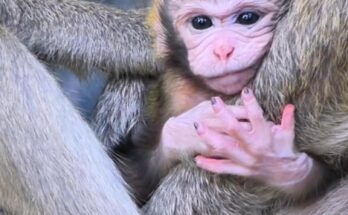
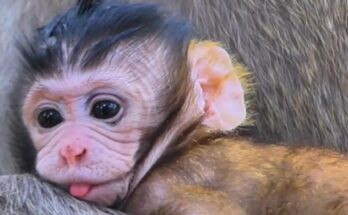
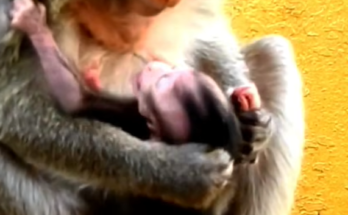
The life of a baby monkey is supposed to be filled with love, warmth, and protection from its mother and family. However, sometimes the little one faces a difficult reality that breaks the hearts of everyone who watches. Instead of receiving gentle care and affection, the helpless baby may experience rejection, loneliness, and rough treatment from adult monkeys. Its tiny body and innocent eyes seem to tell a sad story that no words can fully explain.
As the baby monkey tries to stay close to the adults, it may be pushed away or ignored when it needs comfort the most. Sometimes, it cries loudly, hoping that someone will come to help. It may reach out its little hands, searching for a warm embrace or simply wishing to feel safe beside its mother. Sadly, the adults do not always respond with the tenderness that people expect. Watching such moments can leave many animal lovers wondering why this innocent creature must endure so much hardship.
Why do adult monkeys sometimes mistreat baby monkeys? There can be several reasons behind this behavior. Monkeys live in complex social groups, and their relationships are influenced by dominance, competition, stress, and the availability of food. Some mothers may lack experience caring for their newborns, while others may reject their babies because of stress or difficult environmental conditions. Adult monkeys may also display aggression when protecting their territory or establishing their position within the group. Although these behaviors can seem cruel to human observers, they are part of complicated social interactions and do not always mean that an adult deliberately intends to cause suffering.
For the little baby, however, the experience can still be frightening and painful. It needs protection, proper nutrition, and a safe environment to grow. Without adequate maternal care, a young monkey may struggle to survive and develop normally.
Despite these heartbreaking moments, there is still hope. In some situations, other members of the group may offer protection, and appropriate human intervention may be necessary when a baby is seriously injured or abandoned. Wildlife professionals can assess the situation and determine the safest way to help.
The miserable life of a baby monkey reminds us that even the smallest animals can face enormous challenges. Every baby deserves compassion, safety, and a chance to live. By learning more about monkey behavior and respecting wildlife, we can better understand their struggles and encourage responsible protection for these vulnerable creatures