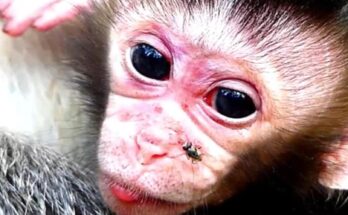
Monkeys live in complex social groups where every member has a place within the troop. Just like many other social animals, monkeys often have a hierarchy that influences how they interact, compete, eat, rest, and protect themselves. Higher-ranking monkeys may have greater access to food, safer resting areas, and preferred companions, while lower-ranking monkeys can face more challenges in their daily lives.
In some troops, lower-ranking monkeys may be pushed away from food or chased from comfortable places by stronger members. They can also experience aggressive behavior, intimidation, or repeated conflicts. Watching these interactions can be difficult, especially when a smaller or younger monkey appears unable to defend itself. However, these behaviors are part of a complicated social system rather than simply random bullying.
Monkey hierarchies can help organize group relationships and reduce uncertainty about who has priority in different situations. Rank can be influenced by factors such as age, strength, family connections, experience, and social alliances. A monkey with strong relationships may receive support from others, while an isolated individual can be more vulnerable to aggression.
For a lower-ranking monkey, life within the troop may require patience, awareness, and careful social behavior. It may avoid unnecessary conflicts, wait for opportunities to access food, or stay close to trusted companions. Over time, social positions can change as monkeys grow older, form alliances, or become stronger.
These interactions remind us that monkey communities are far more complicated than they may first appear. Their behavior shows how social relationships, competition, cooperation, and communication shape everyday life. Although conflict can sometimes be harsh, monkeys also display affection, grooming, protection, and cooperation. Understanding their hierarchy helps us appreciate the fascinating social world of these intelligent animals and encourages us to observe their behavior with curiosity and respect rather than judging every interaction through a human perspective.