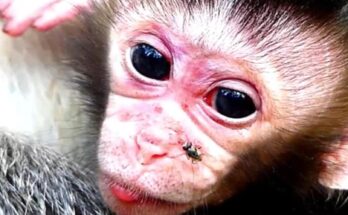
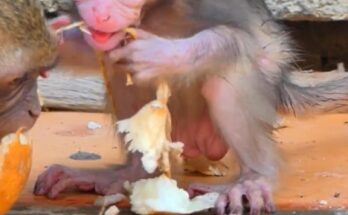
The baby monkeys faced a difficult start to life as they struggled to get enough milk from their mothers. During the first weeks after birth, milk is the most important source of nutrition, providing the energy and nutrients young monkeys need to grow strong and healthy. Without enough milk, the tiny babies quickly became weak, tired, and unable to keep up with the rest of the group.
As hunger grew, the baby monkeys cried more often, hoping their mothers would nurse them. Some clung tightly to their mothers, searching for comfort and food, while others rested quietly because they no longer had the strength to move very much. Their thin bodies and slow movements showed how much they needed proper care and nourishment.
The mothers also faced many challenges. In the wild, food shortages, stress, competition within the troop, or illness can sometimes affect a mother’s ability to produce enough milk. These natural difficulties can make caring for newborns much harder, even when the mothers stay close to their babies.
Watching weak baby monkeys can be emotional because their survival depends heavily on receiving enough nutrition during the earliest stages of life. Every feeding gives them a better chance to grow stronger, develop healthy muscles, and become more active. As conditions improve and food becomes more available, many mothers are able to care for their babies more successfully.
This story reminds us how fragile newborn animals are and how important a mother’s care is during the first months of life. Baby monkeys rely on warmth, protection, and proper feeding to survive and thrive. By understanding the challenges wildlife faces, we can better appreciate the importance of protecting natural habitats where monkey families can find enough food and raise healthy young. Every healthy baby monkey represents hope for the future of its troop and the forests they call home.