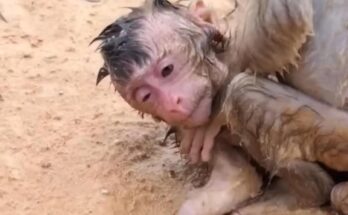
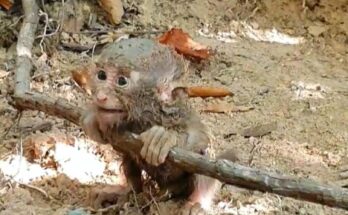
The first weeks of a baby monkey’s life are critical for its survival and healthy development. A weak baby monkey is especially vulnerable because it may struggle to feed, stay warm, or keep up with its mother and group. Careful monitoring helps identify health problems early and provides the support needed to improve the animal’s chances of survival.
One of the most important aspects of monitoring is observing the baby monkey’s physical condition. Caregivers or wildlife researchers check for signs such as low body weight, dehydration, injuries, or difficulty moving. A healthy baby monkey is usually active, alert, and able to cling to its mother. In contrast, a weak infant may appear tired, cry frequently, or have trouble holding on. These observations provide valuable information about the baby’s overall health.
Nutrition is another key factor. Baby monkeys depend heavily on their mother’s milk during the early stages of life. If the mother cannot produce enough milk or rejects the infant, trained caregivers may need to provide a suitable milk replacement under veterinary guidance. Regular feeding schedules and weight checks help ensure the baby is receiving enough nutrients for healthy growth.
The environment also plays a major role in recovery. A weak baby monkey should be kept in a clean, safe, and stress-free setting with an appropriate temperature. Reducing unnecessary handling and providing opportunities for bonding with its mother or members of its own species can support normal emotional and social development.
Monitoring should include regular health assessments by qualified wildlife veterinarians or animal care professionals. They can diagnose illnesses, treat infections, and recommend the best care plan. Detailed records of feeding, weight, behavior, and medical treatment allow caregivers to track progress over time.
In conclusion, monitoring a weak baby monkey requires patience, knowledge, and consistent care. By paying close attention to its health, nutrition, behavior, and environment, caregivers can improve its chances of recovery while supporting its natural development and future well-being.